
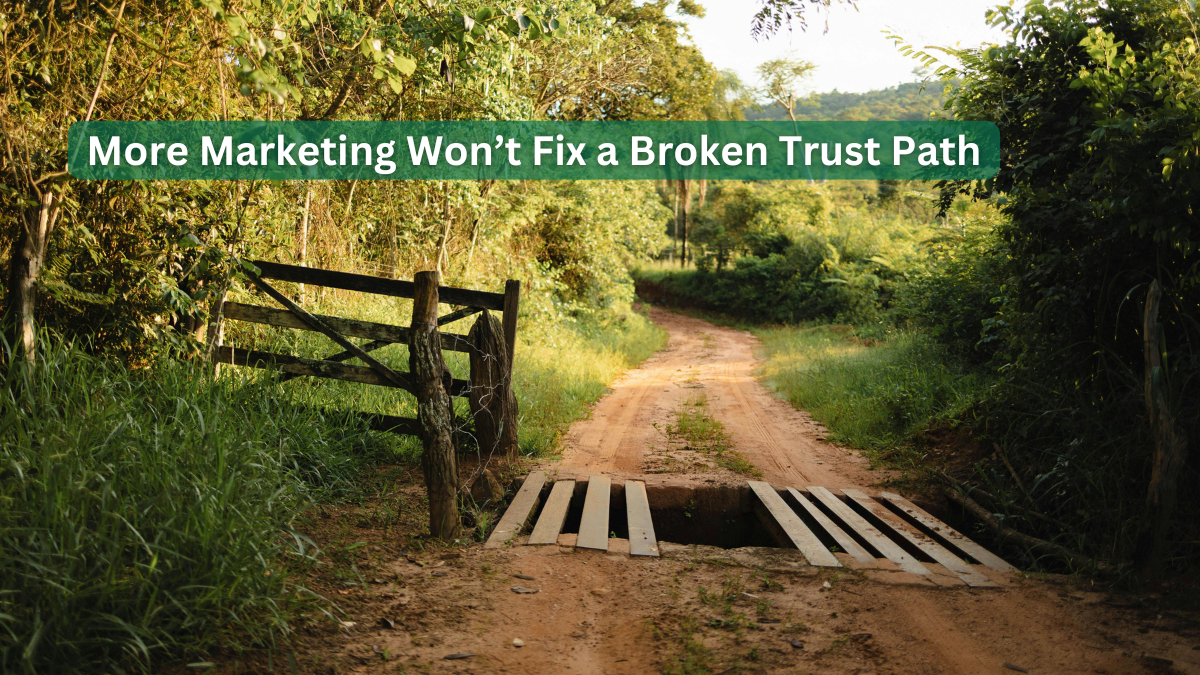
This past week, I spent several days listening to people talk about AI. Not casually, but deeply.
Websites. Emails. Social posts. Ads. Automation. Customer journeys. Content systems. New tools. Faster workflows. Better prompts. Smarter agents.
And honestly? It was exciting. It was also a little overwhelming.
AI is moving fast. Really fast. McKinsey’s 2025 State of AI report found that 88% of respondents said their organizations regularly use AI in at least one business function, up from 78% the year before. The same report notes that many organizations are still working through how to scale AI and turn usage into meaningful business impact.
That sounds familiar, doesn’t it? Because small business owners are feeling a version of that too. There are tools that can help you build a website, write your emails, schedule your social posts, generate ads, create videos, summarize reviews, respond to customers, and plan your content calendar. That can be helpful. But it can also create a new kind of pressure.
Because suddenly, the question becomes: If I can create more marketing faster, why isn’t it working better?
More output does not always create more trust
This is where a lot of businesses get stuck. They assume the next step is more.
More content.
More ads.
More emails.
More automation.
More tools.
More visibility.
More traffic.
But sometimes, the real issue is not that people are failing to notice you. Sometimes they are noticing you, but they are not sure what to do next.
Or they are not sure they understand what you offer, or if your business is the right fit, or whether they trust the path in front of them.
That’s not always a traffic problem. It’s often a trust problem.
AI can help you move faster. Clarity helps people move forward.
I am not anti-AI. Far from it.
AI can be incredibly helpful when it’s used with thought, strategy, and human judgment. It can help you organize ideas, speed up repetitive work, draft content, analyze patterns, and create a stronger starting point.
But AI cannot automatically tell whether your customer feels safe enough to take the next step. It cannot always see the hesitation hiding between the click and the conversion. With the right prompt and human judgment, AI can help you spot some of those disconnects. But on its own, it may not recognize that your website says one thing, your Google Business Profile says another, your social media feels outdated, and your landing page is asking a cold visitor to decide too soon.
That is where clarity matters. Because when your marketing is unclear, even good tools can help you create more confusion faster.
Customers are asking quieter questions now
People are becoming more aware of AI-generated content, automated replies, templated messaging, and generic marketing. That does not mean they reject all of it. But it does mean trust matters more.
Salesforce’s State of the AI Connected Customer Report found that 61% of customers say advancements in AI make it even more important for companies to be trustworthy. The report also found that only 42% of customers trust businesses to use AI ethically, down from 58% in 2023. [
That matters. Because your potential customers may not be saying these things out loud, but behind the scenes, they’re often asking questions like:
Is this business real?
Do I understand what they actually do?
Does this feel personal or generic?
Will they follow through?
Can I trust them with my money, time, home, business, family, or information?
What happens after I click?
Those questions shape decisions. And if your marketing does not answer them clearly, people may leave without ever telling you why.
The trust problem usually shows up in small places
Trust friction is not always obvious. Sometimes it is a missing service area or an outdated social profile. Sometimes it is a landing page that jumps straight to “buy now” before the visitor understands why they should care or a Google Business Profile that does not match the website.
It could be a form that asks for too much information too soon or a vague headline that could belong to almost any business in your industry. It might even be a polished message that sounds nice, but does not actually help the customer decide.
None of these things are usually catastrophic on their own. But together, they create hesitation. And hesitation is often where conversions quietly disappear.
Before you add another tool, check the path
AI tools can certainly help you produce more. But before you produce more, it helps to pause and look at the customer path you already have.
Ask yourself:
Is my offer easy to understand? Can someone quickly tell what I do, who I help, and what problem I solve?
Is the next step obvious? Do people know whether they should call, book, buy, fill out a form, visit a page, or send a message?
Do my trust signals show up early enough? Reviews, examples, experience, clear process, photos, FAQs, guarantees, privacy reassurance, and plain-language explanations can all reduce hesitation.
Does my marketing sound like a human is behind it? Helpful usually outshines polished when people are trying to decide whether they can trust you.
Do all my touchpoints tell the same story? Your website, Google Business Profile, social pages, ads, emails, and landing pages should feel connected. When they do not, people may sense the inconsistency even if they can’t name it.
The real goal is not just more marketing
The real goal is not to create more noise. It’s to create a clearer path, one where the right people can quickly understand what you do.
A path where they feel reassured instead of overwhelmed. Where your visibility, message, and trust signals work together. Where people do not have to work so hard to decide whether to keep moving.
That is the part AI cannot fully do for you. It can help you build, draft, organize, even move faster. But your marketing still needs human clarity, because people do not move forward just because you published more. They move forward when the path feels clear enough to trust.
If your marketing is getting attention but not action
If your website, ads, content, or social posts are getting some attention but not enough action, the problem may not be effort. It may not even be visibility. There may be a trust gap somewhere in the path.
That is exactly what the free Clarity Catcher™ Snapshot is designed to help you notice.
In about 60 seconds, it can help you see whether your marketing feels clear, fuzzy, or invisible, and where people may be getting stuck before they take the next step.
Because AI can help you create more marketing. But clarity helps people know why they should trust it.