
I was thinking the other day about some of the families I knew growing up. Not close friends necessarily. Just neighbors, classmates, and families we crossed paths with enough that I knew who they were.
Except I realized something a little strange.
In several cases, I remember their dogs better than I remember them.
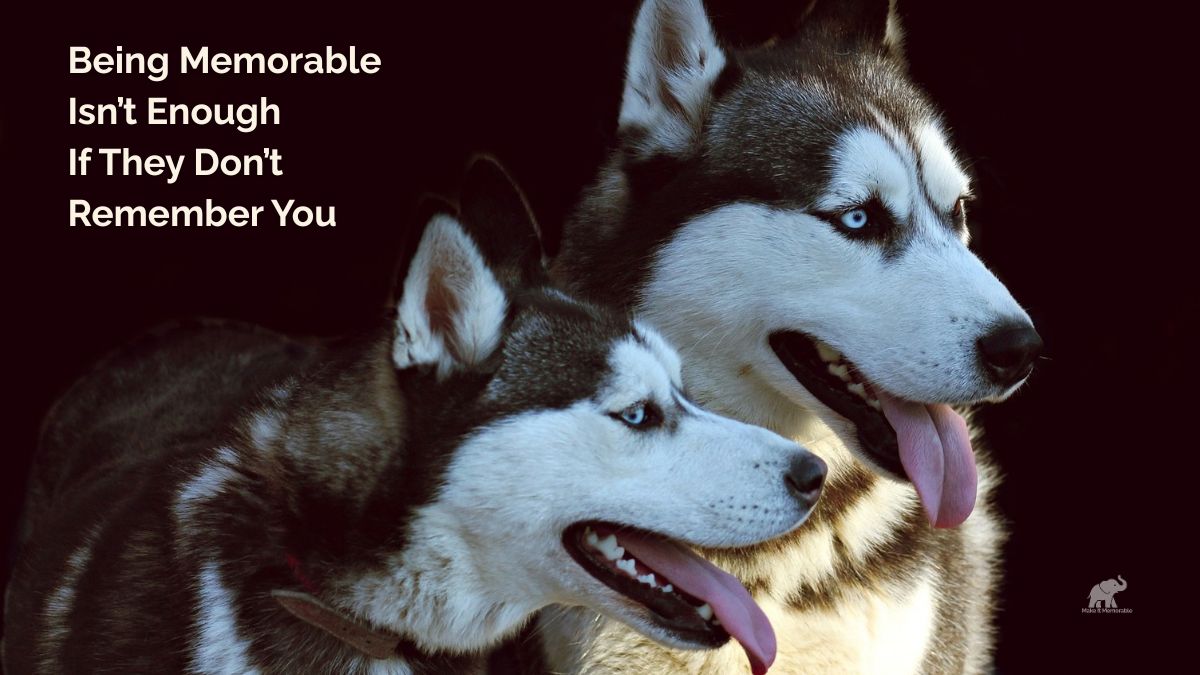
One family had two huskies, a brother and sister, that they had somehow taught to chew gum. Yes, chew gum. I have no idea why that particular piece of information has occupied valuable real estate in my brain for all these years, but apparently it has.
Another family had a beautiful collie and one had an energetic Irish setter. I couldn’t tell you any of the dogs’ names now, but I can still tell you exactly which families they belonged to.
That got me wondering about memory and, because my brain apparently has a permanent marketing side road, branding.
Why Some Brands Stay With Us
There are advertisements from decades ago that I can still hear in my head. “The best part of waking up…” and I’m betting a lot of people my age can finish that sentence without any help. I remember the Charmin commercials. I remember the giant Kool-Aid pitcher crashing through the wall, and Tony the Tiger eating his Frosted Flakes.
Yes, I’m dating myself.
More recently, there’s Flo from Progressive, the Cheetah from Cheetos, and Mayhem from Allstate. Mayhem is actually one of my favorite advertising characters, even though I have never purchased Allstate insurance.
That part is interesting to me.
The advertising didn’t turn me into a customer, but it did create a very strong association. I see Mayhem and think Allstate. I see Flo and think Progressive. The character and the company are connected in my head.
But we’ve probably all had the opposite experience too. You remember a funny commercial, a catchy line, or maybe even the entire premise, but you can’t remember what company it was advertising.
Today, we can type a rough description into Google, ChatGPT, Claude, or another search tool and probably figure it out. Your prospective customer, however, probably isn’t going to work that hard to reconnect a vague memory with your business.
The more I thought about that, the more I realized the interesting part isn’t really whether something is memorable. It’s whether the memory has somewhere to belong.
That brings me back to those dogs.
The gum-chewing huskies were unusual enough that the memory stuck. The collie and Irish setter were distinctive enough that I still associate them with particular families. I don’t remember every detail, and I don’t remember their names, but my brain still knows where those memories go.
That may be closer to what we want from branding.
People don’t need to remember every sentence on your website, every service you offer, or the exact social post they saw six months ago. But over time, they should begin to recognize something. Maybe it’s the way you explain things. Maybe it’s the kinds of problems you consistently notice. Perhaps it’s your personality, your visuals, your approach, or a point of view that keeps showing up.
Eventually, those pieces start forming an association.
“Oh, that’s the company that…”
“That’s the person who…”
And when a need appears later, there’s enough of a connection that they can find their way back to you.
Small Businesses Build Recognition Differently
Of course, there’s an obvious difference between Progressive, Allstate, Folgers, Charmin, Kool-Aid and the local HVAC company down the road.
Budget.
National brands can repeat the same characters, sounds, colors, messages and ideas over and over again. Some of them have been doing it for decades. Most small and local businesses don’t have that luxury.
You probably aren’t going to run enough commercials to turn your mascot into the next Flo. You may never have a jingle. And frankly, the world may be okay with fewer local-business jingles.
But smaller businesses can still become recognizable. They just have to build that recognition differently.
Your website, Google Business Profile, social posts, emails, visuals and the way you talk about what you do can all reinforce the same general picture. They don’t need to repeat the exact same words. In fact, they probably shouldn’t. But they should feel like they belong to the same business.
That’s where I think consistency sometimes gets misunderstood.
Consistency can sound like saying the same thing over and over forever. But I don’t think that’s what it means.
I don’t remember one isolated photograph of those huskies. I remember something distinctive about them. That strange little detail became part of how my brain identified that family.
A business can work the same way.
Maybe there are certain questions you consistently answer, certain problems you tend to notice, phrases you naturally use, or a particular way you approach your work. Your content can change. Your topics can change. Your offers may even evolve. But there can still be something recognizable underneath all of it.
That may also explain why a business can post constantly and still be surprisingly hard to remember.
If every post follows a different trend, every platform sounds different, the website tells a different story, and the offer changes depending on where someone encounters you, there may be plenty of activity without much for the brain to connect.
You may be visible without becoming particularly recognizable.
That’s a distinction worth paying attention to.
What Do People Remember About Your Business?
So maybe the better question isn’t whether people remember your logo. I’d be more curious about what they remember about the business itself.
If someone had followed you for several months, how would they describe you to somebody else? If they saw one of your posts without the logo attached, would anything about it feel familiar? And if they needed your service six months from now, would they remember enough to find you again?
You don’t need perfect answers to those questions. But the answers may tell you whether your marketing is gradually building an association or whether you’re mostly creating individual pieces that disappear once someone scrolls past them.
For a business named Make It Memorable, perhaps I should have figured this out sooner.
But I think “memorable” probably needs a little more context.
A commercial people talk about for years doesn’t help much if nobody remembers who made it. A clever social post can get plenty of attention without building any lasting connection to the person behind it. And a beautiful website can leave an impression while still leaving someone fuzzy about what the business actually does.
What I’d want instead is for the memory that sticks to carry a little bit of the business with it: what you do, how you help, what feels distinctive about your approach, and enough familiar clues that someone can find their way back when the timing is right.
You probably don’t need a gum-chewing husky to accomplish that.
Although I have to admit, it worked pretty well for that family.